
How Rainbet Plinko Works
A ball drops through rows of pegs and lands in a multiplier slot — that's the whole game. What makes Plinko interesting is how the risk level and row count reshape the payout curve. Here's the mechanics, the maths intuition, and the myths worth ignoring.
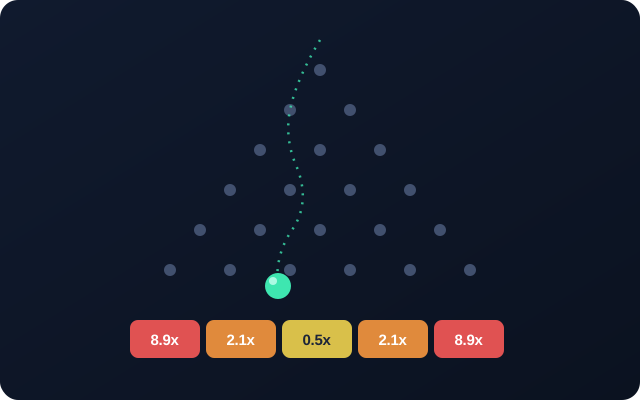
The Three Settings That Matter
Before each drop you choose a stake, a risk level and (in most versions) the number of rows. Outcomes are random; these settings only shape the distribution of possible results.
| Setting | What it controls | Practical effect |
|---|---|---|
| Stake | Amount wagered per ball | Directly scales both potential loss and payout; small stakes stretch a budget across many drops |
| Risk level | The multiplier values in the slots | Low keeps results near break-even; high makes most drops lose small while edges pay large |
| Rows | How many peg rows the ball crosses | More rows widen the bell curve — rarer edge hits, bigger top multipliers |
The game shows the exact multiplier layout for each configuration before you drop, so read the slots rather than assuming values.
Why the Ball Lands Where It Lands
Each peg bounce sends the ball left or right, so a drop behaves like a series of coin flips. Sum many flips and you get a bell curve: the centre is common, the edges are rare. That's the entire reason edge slots carry big multipliers — they price in their own rarity.
Every drop is independent. The board doesn't "owe" an edge hit after a cold streak, and dropping five balls at once doesn't bend the odds. If a round-based multiplier game with a decision element appeals to you more, look at Aviamasters, where you choose when a round's multiplier applies — or Mines, where you decide when to cash out.
No guaranteed Plinko strategy exists. Videos and sellers promising "patterns", drop-timing tricks or predictor apps are selling noise — outcomes are random and each drop is independent. Treat any "guaranteed profit" claim as the red flag it is. The honest levers are stake size, risk level, rows, and the discipline to stop at a pre-set limit.
Stake Size, Variance and Your Budget
Cautious session
Low risk, fewer rows, stakes around CA$0.10–CA$0.50. Results cluster near break-even; a CA$20 budget can last a long while. Good for learning the game's feel.
Middle ground
Medium risk with moderate rows mixes frequent small losses with occasional 3–10x hits. Variance rises; budgets drain faster between hits.
High variance
High risk and maximum rows means most drops return little while you wait for a rare edge multiplier. Only sensible with money you're fully prepared to lose.
Keep Plinko as Entertainment
Fast rounds make it easy to wager more than intended — a drop every couple of seconds adds up quickly. Set a spending cap and a time cap before the first ball, never chase an edge slot with money needed for essentials, and stop if the game stops being fun. You must meet the legal age in your province or territory. This is an affiliate-supported information page, not the casino.
Rainbet Plinko FAQ
Yes. Each ball's path is determined by the game's random process, and every drop is independent of the previous one. Past results, streaks and drop timing have no effect on the next outcome.
No. Any tool, pattern or seller claiming guaranteed Plinko outcomes is misleading you — the outcome of each drop is random. The only levers you genuinely control are stake size, risk level, row count and when you stop.
Higher risk redistributes the multiplier slots: the edges pay far more while the centre pays less, making results swingier. Lower risk compresses the range for steadier but smaller outcomes. It changes variance, not the house edge.
Top multipliers depend on the risk level and number of rows you select — the game displays the exact slot values for each configuration before you drop. Hitting an edge slot is rare by design, which is why its multiplier is large.
More from this series: grid-based Mines, aviation-themed Aviamasters, or the wider Rainbet casino information hub. Playing on a phone? See the mobile guide, and check the BOOST20 rakeback page before your first deposit.