
How to Play Mines on Rainbet
Mines is the platform's grid-based nerve test: reveal safe tiles, watch a multiplier grow, and decide whether greed or discipline wins. The rules take a minute to learn; the cash-out decision is the whole game. Here's how it works and how the risk settings reshape it.
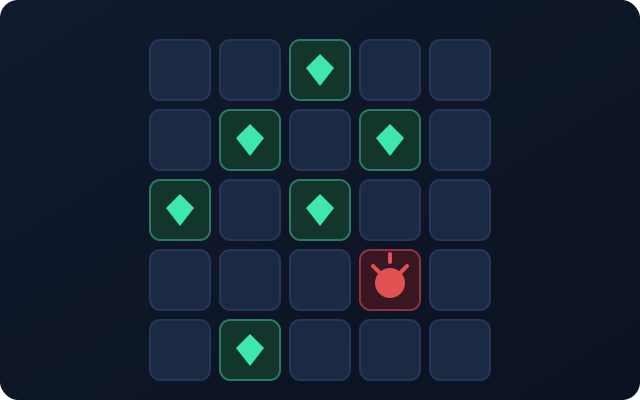
A Round, Step by Step
- Set your stake and mine count.
The grid (commonly 5×5) hides the number of mines you choose — from one to nearly the whole board.
- Reveal a tile.
A gem means the round continues and the multiplier ticks up; a mine ends the round and takes the stake.
- Watch the multiplier grow.
Each successive safe reveal is statistically harder, so the multiplier accelerates with every gem.
- Cash out — or push on.
You can bank the current multiplier at any moment. Continuing risks everything accumulated so far.
- The round resolves.
Cash out and the multiplied stake is credited; hit a mine and the round is over. Mine positions are freshly randomized every round.
Mine Count and Risk Profile
The mine slider is the game's risk dial. As a rule of thumb, adding mines makes each reveal less likely to succeed while making the multiplier climb faster — a steeper, swingier profile.
| Setup | Safe-reveal odds | Multiplier growth | Session character |
|---|---|---|---|
| Few mines (1–3) | High per tile | Slow | Long rounds, frequent small cash-outs |
| Moderate (5–10) | Medium | Noticeably faster | Real tension by mid-board; busts are common |
| Many mines (15+) | Low per tile | Very steep | Most rounds end fast; rare reveals pay heavily |
Exact multiplier values are shown in the game for each configuration — read them there rather than relying on third-party charts.
Discipline Beats "Systems"
Mine positions cannot be predicted — they're randomized every round, so predictor apps and "revealed grid" screenshots are fabrications, and the ones demanding a login are phishing attempts. No staking progression fixes this either; doubling after a bust just accelerates losses when variance runs cold.
What a player can control: stake size, mine count, and a pre-committed cash-out point. Decide "I reveal four tiles, then bank" before touching the grid, and let that rule — not the adrenaline of a live streak — make the decision. The same discipline logic applies across Aviamasters and Plinko.
Bankroll Guidance
Mines rounds are quick and busts feel personal, which invites chasing. Keep stakes to a small slice of a session budget you can afford to lose — say CA$0.50 rounds on a CA$25 budget — and walk away at your limit, whether ahead or behind. Outcomes are uncertain; no session is "due" a win. You must meet the legal age in your province or territory, and help is available through provincial problem-gambling services if play stops being fun.
Rainbet Mines FAQ
You set a stake and choose how many mines hide on the grid. Each safe tile you reveal grows a multiplier; you can cash out at any point, but revealing a mine ends the round and loses the stake. Mine positions are set randomly each round.
No. Positions are generated randomly for every round, so predictors, pattern maps and revealed-grid apps cannot work. Treat anything promising to show mine locations as a scam, especially if it asks for your login details.
More mines generally means each safe reveal is less likely but pays a faster-growing multiplier, so the risk profile steepens. Fewer mines produce gentler, more frequent small results. Neither setting shifts the expected return in your favour.
There is no mathematically winning answer — every additional reveal risks the accumulated multiplier. A disciplined approach is deciding a target number of reveals before the round starts and cashing out there, rather than deciding mid-round while a streak is running.
Related pages: Plinko and Aviamasters for the other originals, the BOOST20 promo guide for rakeback before you deposit, the mobile guide for playing on your phone, and the Rainbet casino guide for the whole platform.